For Parents looking for the Healthiest Dairy-free Formula
Sprout Organic vs Soy: Which Plant-Based Formula Is Healthiest
Soy, allergies, arsenic and newborn safety, explained
Quick Answer
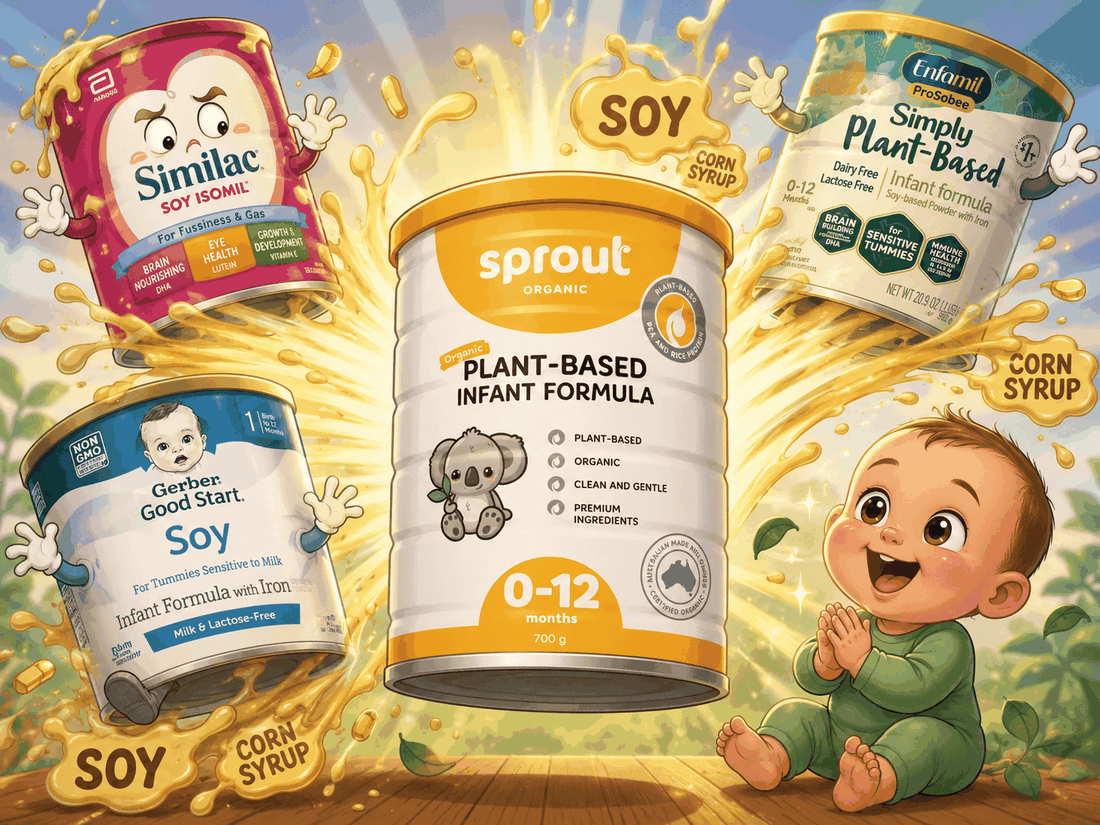
Sprout Organic is a 100% plant-based, vegan-certified infant formula made from pea and rice protein, no soy, no corn syrup, no palm oil. Most American "plant-based" formulas are soy-based and rely on corn syrup as the carbohydrate. For parents avoiding soy phytoestrogens, corn-based sugars, and palm oil, Sprout offers a cleaner ingredient profile, using organic hydrolyzed rice starch instead of corn syrup and coconut oil instead of palm oil, and it costs about the same as U.S. soy formula. In the U.S., Sprout is only available online through websites such as Grow Organic Baby, the leading U.S. seller.

Is Soy Formula Actually Vegan?
Usually not, and the reason surprises most parents. It is not the protein. It is the vitamin D.
Vitamin D3 (cholecalciferol) is most commonly produced from lanolin, a wax extracted from sheep's wool. That is the standard vitamin D source in U.S.-manufactured plant-based formulas, including the soy formulas marketed to plant-based families. Some formulas made outside the U.S. use vitamin D3 from lichen instead. So a formula can be dairy-free, built entirely on plant protein, and still contain an animal-derived ingredient.
DHA is less of a sticking point in the U.S. than many parents assume. Major American formulas typically use algal DHA (from Crypthecodinium cohnii) and fungal ARA rather than fish oil, so vitamin D is usually the single ingredient that stops a "plant-based" formula from being genuinely vegan.
That is the practical difference between a plant-based marketing claim and an actual certification. Sprout Organic uses plant-derived vitamin D and algae-derived DHA, which is why it carries Vegan Australia Certification rather than a plant-based label alone. If a fully plant-based start matters to your family, the practical step is to check the label or ask the manufacturer what their vitamin D is derived from.
The U.S. Plant-Based Formula Market: Why Choice Is So Limited
In the United States, soy-based formulas have existed since the 1920s and now make up roughly 20 to 25% of the U.S. formula market. Their popularity grew from demand for a dairy-free option for babies who couldn't tolerate cow's milk protein.
But the category is dominated by a small number of large brands, which means most products share very similar ingredient profiles. Abbott (Similac) and Mead Johnson (Enfamil) lead, followed by Gerber (Nestlé) and niche brands like Earth's Best, together accounting for over 95% of the soy formula market.
These legacy giants dominate through WIC distribution contracts, brand awareness, and multi-million-dollar marketing budgets operating within long-standing regulatory frameworks that can slow the introduction of ingredient innovation. The result: soy remains the only widely available plant-based infant protein in the U.S. for babies under 12 months. Access to rice and pea protein formulas is only available online through specialty retailers such as Grow Organic Baby.
Why More Parents Are Choosing Plant-Based Infant Formula
Four key drivers are fueling demand for plant-based infant formula:
- Vegan and flexitarian parenting is surging. A 2025 survey by the Plant-Based Foods Association found 34% of U.S. millennial parents actively sought plant-based options for their children's first foods, including infant formula.
- Some babies need a dairy-free formula. Cow's milk protein allergy (CMPA) affects 2 to 7.5% of infants in the first year of life. That means more than 92% of babies do not have it, but for those who do, every cow's milk protein has to come out of their diet.1 CMPA is often confused with lactose intolerance, which is rare in full-term babies (see below).
- Nutritional innovation. Improved production techniques have unlocked better bioavailability and nutritional completeness in plant proteins.
- E-commerce expansion. Global shipping now gives U.S. families access to specialty formulas that were previously available only abroad.
Lactose Intolerance vs Cow's Milk Protein Allergy in Babies
These are two different conditions, and formula marketing often blurs them.
Lactose intolerance means trouble digesting lactose, the sugar in milk. Apart from a rare congenital form, babies are not born lactose intolerant. True lactose intolerance usually develops later, from around ages 2 to 3. There are two exceptions in infancy. Babies born before 34 weeks may not make enough lactase (the enzyme that digests lactose) at first, but their gut starts producing it over the weeks after birth. And a temporary lactose intolerance can follow a bout of diarrhea, then resolve once the illness clears.23
Cow's milk protein allergy is an immune reaction to the proteins in cow's milk, whey and casein. Most often it inflames the intestines and shows up as blood in the stool. Some babies have a severe allergic reaction, including anaphylaxis.12
A baby with CMPA needs a formula with no cow's milk protein. If you suspect either condition, talk to your pediatrician before switching.
Why Parents Seek Plant-Based Formula Without Soy, Corn Syrup, or Palm Oil
Most major soy-based infant formulas available in the U.S. contain ingredients some parents prefer to avoid.
Soy
Soy is a common dairy alternative, and some parents have questions about it:
- Phytoestrogens, plant compounds that mimic estrogen. They are not unique to soy and are also found in many grains, fruits and vegetables. Research on hormonal effects from soy is inconsistent, several studies have found no harmful effects, and most pediatricians do not discourage soy formula on these grounds.4
- Allergenicity, soy is a top-8 allergen, and a sizable share of babies who are allergic to cow's milk protein are also allergic to soy. One recent study of infants with cow's milk allergy found soy cross-allergy in 19% to 47%, depending on the years studied.5
- Thyroid conditions. Soy formula is not suitable for babies born with a thyroid disorder.4
It's important to note that soy-based formulas are considered nutritionally adequate and safe for most healthy infants, but they are typically recommended for specific situations rather than as a first-line option.
Corn Syrup
A common U.S. formula ingredient because it's cheap and easy to manufacture. While not formally banned in Europe or Australia, infant-formula regulations there effectively limit corn-based sugars as the primary carbohydrate. Parents avoid corn syrup because it:
- Has been associated in some studies with higher risk of childhood obesity.
- Is a processed carbohydrate that may cause blood-sugar fluctuations.
- Can build a preference for sweet foods. Repeated sweet tastes train the brain to seek out that reward.6
Palm Oil
Palm oil is widely used to replicate the fatty-acid profile of breast milk, but it raises concerns because it:
- Can reduce calcium absorption by binding calcium in the gut.
- May cause constipation and discomfort from calcium-fat "soaps" in the gut.
- Is linked to environmental harm through deforestation and habitat loss.
Many soy-based formulas are also not vegan-certified, as they can include animal-derived ingredients such as lanolin-derived vitamin D3.
For parents seeking a plant-based option that avoids soy, corn syrup, and palm oil, Sprout Organic Infant Formula offers a fully plant-based formulation without these debated ingredients.
Sprout Organic vs Leading U.S. Soy Formulas: Ingredient Comparison
| Category | Sprout Organic | Similac Soy Isomil | Enfamil ProSobee | Gerber Good Start Soy | Earth's Best Non-GMO Soy |
|---|---|---|---|---|---|
| Protein | Rice & Pea | Soy | Soy | Soy | Soy |
| Carbohydrate | Organic hydrolyzed rice starch | Corn syrup & sugar | Corn syrup solids | Corn maltodextrin & sucrose | Organic corn syrup solids |
| Palm Oil? | No | No | Yes | Yes | Yes |
| Corn-derived sugar? | No | Yes | Yes | Yes | Yes |
| Vitamin D source | Plant-derived | Typically lanolin-derived D3 | Typically lanolin-derived D3 | Typically lanolin-derived D3 | Typically lanolin-derived D3 |
| Vegan certified? | Yes | No | No | No | No |
Unlike traditional soy formulas, Sprout uses a blend of plant proteins with a cleaner carbohydrate and oil profile designed to align with modern ingredient preferences.
Moving your baby from one formula to another? See our guide on how to switch baby formulas.
Does Rice-Based Formula Contain Arsenic?
Arsenic occurs naturally in the soil rice is grown in, so most rice contains some, and long-term exposure to inorganic arsenic is linked to cancer. That is why the American Academy of Pediatrics advises limiting infants' exposure to arsenic, including from infant rice cereal.7
It is not only a rice question. Testing of infant formulas sold in the U.S. has found small amounts of arsenic and other heavy metals across the category, including dairy-based formulas.8 Sprout uses organic rice protein and rice starch and is made in Australia to the Food Standards Australia New Zealand (FSANZ) infant formula standard. If heavy metals are a concern for your family, ask any formula maker for its contaminant test results and talk it through with your pediatrician.
Is Powdered Formula Safe for Newborns?
Powdered infant formula is not sterile. In recent years, several powdered formulas in the U.S. have been recalled for bacterial contamination, including a 2026 infant botulism outbreak linked to one brand.911
The CDC asks parents to take extra care with babies who are younger than 2 months, born before 37 weeks, or have a weakened immune system: boil the water and let it stand about five minutes, so it is still around 158°F (70°C) when you mix in the powder, then cool the bottle before feeding.1012 Ready-to-feed liquid formula is sterile, which is why some pediatricians recommend it for the youngest babies. Ask yours what is right for your baby.
How Grow Organic Baby Ships International Formula
- The leading U.S. seller of Sprout, the world's first vegan-certified plant-based formula.
- All U.S. import duties, taxes, and tariffs prepaid. The checkout price is the final price.
- Shipped only once, directly from the manufacturer's warehouse to you, no third-party warehousing, for maximum freshness and safety.
- U.S.-based customer service in Los Angeles, contactable by phone or text, with domestic returns and same-day local pickup for LA/OC formula emergencies.
Conclusion
When comparing plant-based infant formulas, look beyond marketing claims to the actual ingredient composition. For many parents, that means choosing an option that avoids soy, corn-based sugars, and palm oil while supporting a fully plant-based formulation. Newer alternatives like Sprout Organic reflect this shift toward cleaner ingredient profiles, and, importantly, they cost about the same as the inferior US soy formulas.
References
- Cow's milk protein allergy in infants and children. Paediatrics & Child Health (2024)↩
- Lactose Intolerance versus Cow's Milk Allergy in Infants: A Clinical Dilemma. Nutrients (2024)↩
- Understanding the physiology of lactose intolerance and an insight on the recent trends on management strategies. International Dairy Journal (2026)↩
- The role of soy plant-based formula supplemented with dietary fiber to support children's growth and development: An expert opinion. Nutrition (2021)↩
- Escalation of soya cross-allergy in infants with cow's milk allergy. World Journal of Clinical Pediatrics (2025)↩
- Innate and learned preferences for sweet taste during childhood. Current Opinion in Clinical Nutrition and Metabolic Care (2011)↩
- Limit infants' exposure to arsenic. AAP News↩
- Arsenic and other heavy metals in infant formulas (ScienceDirect).↩
- Outbreak investigation: infant botulism, powdered infant formula (June 2026). U.S. FDA (2026)↩
- Infant formula preparation and storage. U.S. CDC↩
- Safety of powdered infant formula (ScienceDirect).↩
- The safety of at-home powdered infant formula preparation: A community science project.↩

This article is for educational purposes and is not a substitute for medical advice. Always consult your pediatrician about your baby's nutrition.