Plant-Based Formula
Nutritional Completeness Requirements for Infants on Vegan Baby Formula
What a plant-based formula must add to fully nourish a baby
Quick Answer
Yes, a vegan baby formula can fully nourish a baby, but only a commercially made infant formula that meets FDA nutrient requirements and is fortified with what plants lack: complete protein from blends like pea and rice, DHA and ARA, vitamin B12, vitamin D, iron, iodine and selenium. Sprout Organic Infant Formula is one example, with pea and rice protein, algae DHA and plant-derived vitamin D2. Homemade formula and plant milks are not safe substitutes.
Key Takeaways
- Vegan baby formula meets an infant's full nutritional needs, only when it is carefully fortified with nutrients like DHA, vitamin B12, and iron that typically come from animal sources
- Protein in plant-based formulas often comes from a blend like organic pea and rice, chosen to deliver a complete amino acid profile similar to what dairy-based formulas provide
- DHA can be sourced from marine algae and ARA from fungal oil instead of fish oil, which matters for cognitive and visual development in the first year of life
- The FDA requires infant formula to meet minimum levels for 30 nutrients and maximum levels for 10, a baseline that any nutritionally complete vegan formula still has to satisfy
- Homemade vegan formula recipes cannot replicate these fortification standards, which is why pediatric guidance points families toward commercially manufactured options instead
Parents considering dairy-free feeding often ask the same question: can a formula made entirely from plants actually give a baby everything cow's milk or breast milk would provide? The answer is yes, but only when the formula is engineered with real precision. Nutritional completeness in a vegan infant formula does not happen by simply swapping out dairy protein for a plant one. It requires deliberate fortification of several nutrients that animal products normally supply on their own.
Can Vegan Formula Truly Meet a Baby's Needs?
Infants have narrow nutritional margins. Their bodies are growing faster than at any other point in life, and their digestive systems can only handle nutrients in specific forms and ratios. A plant-based formula has to hit those same targets as any dairy-based option, just using different raw materials to get there.
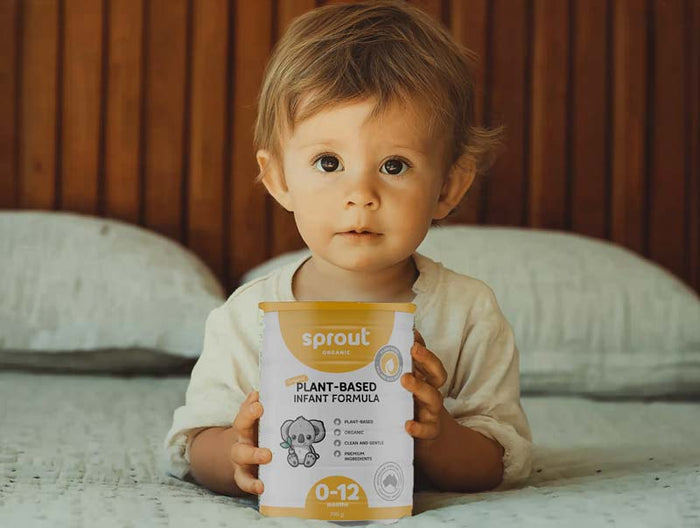
Formulation science matters more than marketing language here. A product labeled "plant-based" is not automatically nutritionally complete for a newborn. Sprout Organic Infant Formula is one example built specifically around this requirement, using organic pea and rice protein along with algae-derived DHA to address the gaps that plant ingredients alone would leave behind. Understanding what those gaps are, and how they get filled, helps parents evaluate any vegan formula with confidence rather than guesswork.

The Nutrients Vegan Formula Must Fortify
A handful of nutrients sit at the center of every conversation about plant-based infant nutrition. Protein, DHA, ARA, vitamin B12, calcium, vitamin D, iron, iodine, and selenium are the nutrients most likely to fall short in a plant-only diet, which is exactly why infant formula makers focus their fortification efforts here.
Protein: Building a Complete Amino Acid Profile
Breast milk and cow's milk naturally contain all nine essential amino acids a baby needs. Most single plant proteins do not, which is why formulators rely on complementary blends rather than one ingredient alone. Pea protein is naturally rich in lysine, while rice protein contributes methionine, and combining the two creates an amino acid profile that functions much like a complete protein source.
Soy is the other common route, since it is naturally a complete protein on its own. Each approach solves the same problem in a different way, and the choice often comes down to what else a family wants to avoid, since soy carries its own considerations discussed further below.
DHA and ARA Without Fish Oil
DHA and ARA are fatty acids tied closely to brain and eye development in the first year of life. Traditional formulas often source these from fish oil or egg-derived ingredients, neither of which fits a vegan standard. Marine algae solves this cleanly, providing DHA in a form that is both plant-derived and stable enough for manufacturing.
ARA fortification typically follows a similar plant-and-microbial route, often paired with algal DHA so the two fatty acids arrive in the ratio infants need. This pairing is now common enough across the industry that it has become one of the more straightforward parts of building a vegan formula.
Vitamin B12: The Nutrient Animal Products Usually Provide
Vitamin B12 is almost exclusively found in animal products in nature, which makes it one of the trickiest nutrients to source for a vegan formula. Formulators address this with synthetic, stable forms of B12, such as cyanocobalamin or methylcobalamin, added directly during production.
B12 deficiency can affect neurological development, which is why pediatric nutrition researchers flag it as a nutrient requiring careful monitoring in any vegan infant diet. This is also why infants raised on plant-based diets benefit from regular check-ins with a pediatrician, who can confirm the formula is delivering adequate levels as the baby grows.
Calcium and Vitamin D for Bone Health
Calcium and vitamin D work together to support bone development, and both need deliberate fortification in a plant-based formula. Vitamin D sourcing carries a hidden wrinkle many parents never think to check: much of the vitamin D3 used across the infant formula industry, plant-based or not, comes from lanolin, a wax extracted from sheep's wool. That means a formula can be entirely free of dairy and animal protein yet still contain an animal-derived ingredient through its vitamin D alone.
A genuinely vegan-certified formula sources vitamin D from plant-derived material instead, closing that particular loophole. Sprout Organic, for example, uses vitamin D2. The CDC says formula-fed infants do not need a separate vitamin D supplement once they drink about 32 ounces of formula a day, since the fortification is already built in. Below that amount, ask your pediatrician.
Iron, Iodine, and Selenium: The Often-Overlooked Trio
Iron, iodine, and selenium tend to get less attention than protein or DHA, but each plays a specific role that matters just as much. Iron supports healthy growth and cognitive development, iodine is essential for thyroid function, and selenium contributes to immune health. All three are naturally more concentrated in animal foods, so a vegan formula has to fortify with each one directly rather than relying on the base plant ingredients to supply them.
- Iron: supports growth and early brain development, added in forms the infant gut can absorb well.
- Iodine: needed for healthy thyroid function, easy to overlook since plant sources vary widely.
- Selenium: contributes to immune function, typically added in trace but carefully measured amounts.
Why Carbohydrate and Fat Sources Matter Too
Protein and micronutrients get most of the attention, but the carbohydrate and fat sources in a formula shape digestion, energy, and how closely the formula resembles breast milk in daily feeding.
Rice Starch and Other Carbohydrate Choices
Carbohydrates in vegan formulas commonly come from organic rice starch, corn maltodextrin, or dextrin-maltose. Organic rice starch is often favored as a primary carbohydrate because it provides sustained energy and tends to be gentler on a developing digestive system, contributing to smoother, easier-to-digest formula compared with some processed sugar alternatives. Corn syrup solids remain common in many mainstream American formulas, but they are not the only option, and some parents specifically look for formulas that avoid them, one of the markers covered in our guide to the healthiest baby formula.
Vegetable Oils That Mirror Breast Milk
Fat sources matter just as much as carbohydrate sources, since fat provides roughly half of an infant's daily calories. Vegetable oils such as canola, coconut, sunflower, and safflower oil are commonly blended to approximate the fatty acid profile found in breast milk. Coconut oil in particular is often chosen as an alternative to palm oil, since palm oil has been associated with reduced calcium absorption and digestive discomfort in some infants. Getting this oil blend right is part of what separates a formula that merely lists plant ingredients from one engineered to actually function like breast milk nutritionally.
Regulation Behind a Nutritionally Complete Label
Nutritional completeness is not a marketing claim, it is a regulatory one. Understanding the standards behind that label helps explain why plant-based options look so different depending on where they are made.
FDA Standards for Required Nutrients
In the United States, the FDA mandates that infant formula contain minimum levels of 30 nutrients and maximum levels for 10, covering everything from protein and fat to specific vitamins and minerals. Any formula sold as nutritionally complete for infants has to satisfy this baseline regardless of whether its protein comes from dairy, soy, or another plant source. Some formulas sold internationally are regulated under different frameworks; Food Standards Australia New Zealand, for example, sets minimum standards that align closely with international Codex guidelines.
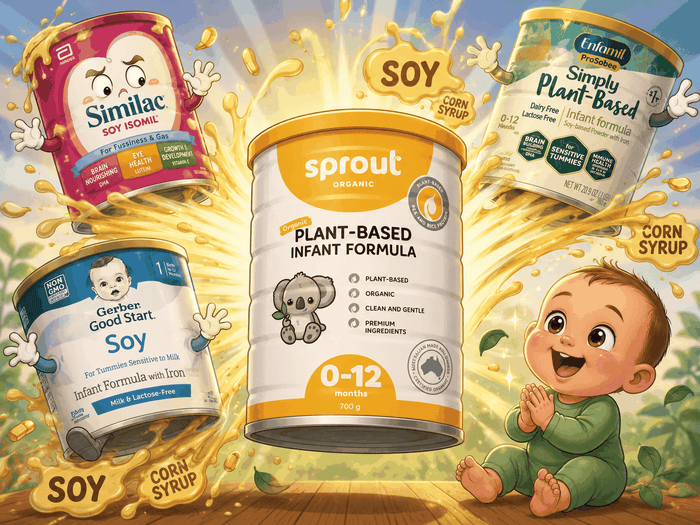
Why Soy Dominates US Plant-Based Options
Soy protein has been the standard plant-based protein in US infant formula for decades, which explains why soy dominates the plant-based formula shelf in American stores. Rice and pea protein formulas exist and meet nutritional completeness standards elsewhere, but in the U.S. they are typically available only through specialty importers rather than mainstream retail.
This regulatory gap also explains a detail that surprises many parents: plenty of soy-based formulas marketed as plant-based are not actually vegan-certified, precisely because of that lanolin-derived vitamin D3 mentioned earlier. A formula built with plant-derived vitamin D and algae-derived DHA, by contrast, can carry an actual vegan certification rather than just a plant-based label. Sprout Organic, for instance, launched its vegan infant formula in 2021 to meet this higher bar.
Why Homemade Vegan Formula Falls Short
Some parents, drawn to the idea of full control over ingredients, consider making infant formula at home. Pediatric nutrition guidance is consistent on this point: homemade formulas, vegan or otherwise, cannot be tested to confirm they are free from harmful ingredients or that they deliver correct micronutrient and macronutrient ratios.
The risks compound quickly. Homemade recipes commonly miss critical nutrients like B12, iron, and DHA, since these require precise fortification methods that are difficult to replicate outside a manufacturing setting. They can also introduce contamination risks and digestibility problems that a commercially produced formula, tested against regulatory standards, is designed to avoid. For infants especially, the margin for error is too narrow to justify the experiment.
Nutritional Completeness Is Achievable, With Careful Fortification
Vegan infant formula can meet a baby's nutritional needs, and the science behind it has matured considerably. The key lies in fortification done with precision: complete protein blends, algae-derived DHA, ARA from fungal oil, stable forms of B12, plant-derived vitamin D, and careful attention to iron, iodine, and selenium. None of this happens by accident, and none of it can be replicated safely at home.
For parents weighing a dairy-free start, the practical step is checking exactly how a formula sources each of these nutrients rather than trusting a plant-based label alone. For a formulation built around this exact fortification standard, organic vegan infant formula serves as a useful starting point for that comparison.

This article is for educational purposes and is not a substitute for medical advice. Always consult your pediatrician about your baby's nutrition.