European vs American Baby Formula: Is European Better? (2026)
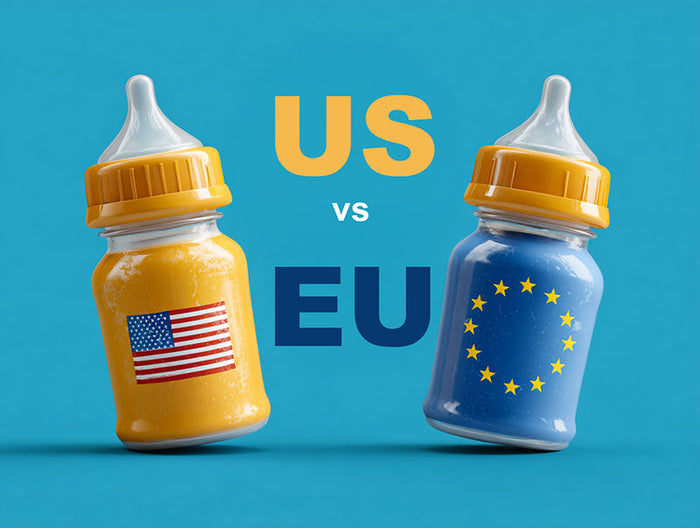
European formula is not more nutritious by default, but EU law is stricter on DHA, lactose, sugar, pesticides and oils. Here is the side by side comparison, sourced to the EU and FDA rules.

Quick Answer
European baby formula is not more nutritious by default: every infant formula sold in the US or the EU must be nutritionally complete. Where EU rules are stricter is on a handful of specific points. EU law makes DHA mandatory, sets a minimum amount of lactose in standard milk formula, only allows added sucrose in hydrolyzed formulas, caps each pesticide residue at 0.01 mg/kg and sets a tighter iron range. US rules make DHA optional and leave the carbohydrate source to the manufacturer, which is why many US formulas use corn syrup solids. If those points matter to you, an EU organic formula such as HiPP, Holle or Jovie is the closer match.
European vs American Baby Formula at a Glance
| Rule | European Union | United States |
|---|---|---|
| Main law | Commission Delegated Regulation (EU) 2016/127, in force since 22 February 2020 | FDA infant formula rules, 21 CFR Parts 106 and 107 |
| DHA (omega 3) | Mandatory: 20 to 50 mg per 100 kcal | Optional |
| ARA (omega 6) | Optional | Optional |
| Lactose | At least 4.5 g per 100 kcal in standard cow or goat milk formula | No minimum: the carbohydrate source is the manufacturer's choice, and corn syrup solids and sucrose are allowed |
| Added sucrose (table sugar) | Only in formula made from protein hydrolysates | Allowed |
| Fructose | Not a permitted carbohydrate | Not prohibited by the FDA nutrient rules |
| Glucose syrup | Permitted, with limits | Permitted |
| Iron | 0.3 to 1.3 mg per 100 kcal (cow or goat milk formula) | 0.15 to 3.0 mg per 100 kcal |
| Pesticide residues | Capped at 0.01 mg/kg for each pesticide | No formula-specific cap in the FDA formula rules |
| Oils | Sesame and cottonseed oil prohibited; trans fat capped at 3% of total fat | No equivalent rule in the FDA formula rules |
Sources: Commission Delegated Regulation (EU) 2016/127, Annex I; 21 CFR 107.100.
Is European Baby Formula Better Than American?
It depends on what you mean by better. Both systems require a complete formula: the FDA sets minimum levels for 30 nutrients and maximums for 10 of them, and EU law sets its own minimums and maximums for every required nutrient. A baby can grow well on a formula from either side of the Atlantic.
The difference is in the details parents tend to care about: whether DHA is guaranteed, whether the formula is sweetened with something other than lactose, and how tightly residues and oils are controlled. On each of those points, EU law asks more of the manufacturer. That is why so many US parents who read labels end up choosing European formula.
Sugar and Carbohydrates: Why US Formula Tastes Sweeter
Breast milk gets its carbohydrate from lactose. EU law requires standard cow or goat milk formula to contain at least 4.5 g of lactose per 100 kcal, so a large share of the carbohydrate has to be lactose. Added sucrose is only allowed in formulas made from hydrolyzed protein, and fructose is not on the list of permitted carbohydrates at all.
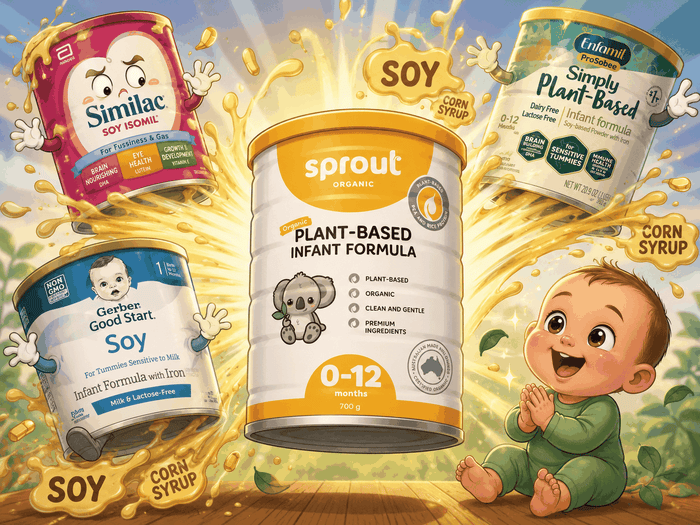
US rules do not specify the carbohydrate source. Many US formulas, especially sensitive, gentle and soy formulas, use corn syrup solids, and some use sucrose. These are sweeter than lactose. Corn syrup solids are not banned in the EU, but the lactose minimum means they cannot replace lactose in a standard milk formula.
For more on what sweeter formula can mean for taste preferences, read added sugars in US baby formula.
DHA: Required in Europe, Optional in the US
DHA is an omega 3 fatty acid found in breast milk that supports brain and eye development. Every EU infant formula must contain 20 to 50 mg of DHA per 100 kcal. In the US, DHA is optional: most major brands add it, but the amount varies and it is not guaranteed. ARA, the omega 6 often paired with DHA, is optional in both the EU and the US.
Iron
EU cow and goat milk formula must contain 0.3 to 1.3 mg of iron per 100 kcal. The FDA range is wider, 0.15 to 3.0 mg per 100 kcal. Both ranges are designed to meet a baby's needs; the EU range simply sits closer to the lower end. If your pediatrician has a view on iron for your baby, follow it.
Organic Standards: EU Organic vs USDA Organic
Both EU organic and USDA organic require at least 95% organic ingredients and both exclude genetically modified ingredients, so EU organic formula and USDA organic formula are both GMO free. Note that it is organic rules, not EU infant formula law, that exclude GMOs: Regulation 2016/127 does not mention them.
The EU brands GOB carries go further than the minimum. HiPP uses its own HiPP Organic standard on top of EU organic, and Holle uses milk from Demeter certified biodynamic farms. For the full comparison of the two organic systems, read EU vs US organic standards.
What EU Rules Do Not Do
Some claims about European formula go further than the law. To set the record straight:
- Glucose syrup is not banned in the EU. It is a permitted carbohydrate, within limits.
- EU infant formula law does not ban GMOs. EU organic rules do, which is why organic EU formula is GMO free.
- ARA is not mandatory in the EU. DHA is.
- Sucrose is restricted, not banned. It is only allowed in formula made from hydrolyzed protein.
Why US Parents Are Switching to European Formula
The main reasons parents give are a lactose based recipe, guaranteed DHA, shorter ingredient lists, organic farming and, for many brands, added prebiotics and probiotics. HiPP Combiotic, for example, adds GOS prebiotic fiber and the L. fermentum culture. European formula also comes in stages matched to a baby's age, from PRE and Stage 1 for newborns through toddler formula.
The European and Australian Brands We Carry
- HiPP: organic cow milk formula from Germany and the Netherlands, with the widest range of specialty formulas, including Comfort, Anti-Reflux and HA.
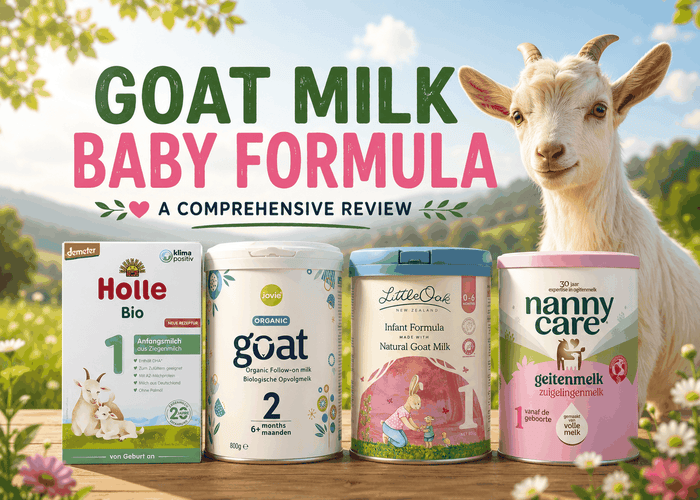
- Holle: organic cow and goat milk formula from Demeter certified biodynamic farms.
- Jovie: EU organic goat milk formula from the Netherlands, made with whole goat milk.
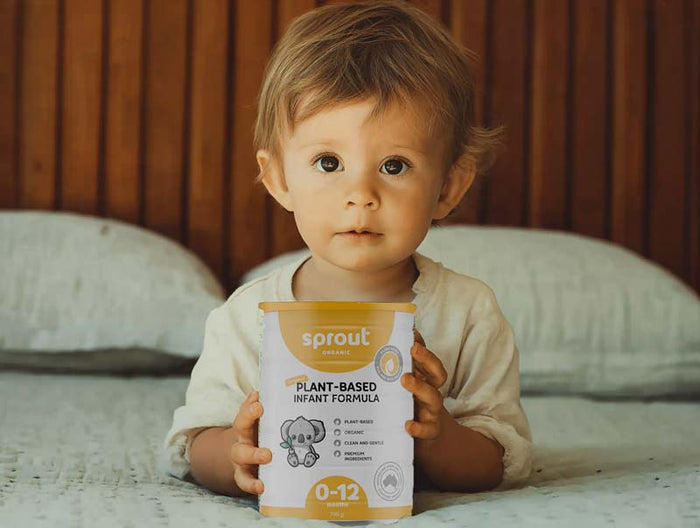
- Sprout Organic: from Australia, made to the Food Standards Australia New Zealand infant formula standard, and the plant based option for dairy free families.
Comparing the two biggest European brands? Read HiPP vs Holle, or see our best organic baby formula guide for every brand side by side.
Is It Safe and Legal to Buy European Formula in the US?
US parents can import formula for their own family's use, and many have done so for years. European formulas such as HiPP and Holle are not sold in US stores because they are made to EU rules with EU labels. What matters is where you buy: choose a specialty retailer with a track record, check that every tin arrives sealed with a clear lot number and use by date, and follow the preparation instructions on the exact version you buy, since HiPP's Dutch, German and UK formulas are separate products.
How to Switch from US to European Formula
- Transition gradually: mix small amounts of the new formula into your baby's current formula and increase the ratio over 5 to 10 days.
- Watch for digestive changes: small shifts in stool or feeding are normal. If discomfort lasts, talk to your pediatrician.
- Check the scoop and water ratio: European formulas often use different scoop sizes, so read the label for the exact version you have.
- Talk to your pediatrician first if your baby has an allergy, reflux or another medical need.

Where to Buy European Baby Formula in the US
Grow Organic Baby ships HiPP, Holle, Jovie and Sprout to US families with import duties prepaid, so the checkout price is the final price. Our customer service team is based in Los Angeles and can help with stages, switching and subscriptions.
Related guides
- EU vs US organic standards: how the two organic systems differ.
- HiPP vs Holle: how the two leading European organic brands compare.
- Best organic baby formula 2026: our top picks across cow, goat and plant based.
- What is the healthiest baby formula?: the five things that separate the cleanest formulas.
- Why FDA infant formula rules lag behind: the US regulatory side in more depth.

This article is for educational purposes and is not a substitute for medical advice. Always consult your pediatrician about your baby's nutrition.